
Germany stands out among manufacturing countries in the world owing to its high level of sophistication, precision, efficiency, and reliability. In the chemical, pharmaceutical, food, and power generation industries, for instance, heat exchangers ensure that the process is always under the appropriate temperatures and levels of energy utilization. Familiarity with various heat exchanger designs used in industrial applications becomes necessary for engineers, plant managers, and buyers.
In Germany’s highly competitive and heavily-regulated industrial sector, choosing the best heat exchanger becomes more than an engineering issue; it becomes a business imperative with implications on the quality of goods and products, energy conservation, and even the cost of maintaining the equipment.
Why Heat Exchanger Selection Matters
The processes occurring in industrial facilities within Germany need to adhere to very stringent rules related to engineering, safety, and environmental protection. Heat exchangers play an important role within the above-mentioned ecosystem as their functionality has a direct impact on process stability and efficiency.
For instance, slight deviations in temperature in chemical production or the pharmaceutical industry might have an adverse effect on the quality of the product or might trigger certain reactions. In a similar way, accurate heat transfer is required when dealing with the food industry and power generation.
Top Heat Exchanger Types Used in German Industry
Therefore, the selection of the appropriate type of heat exchanger becomes a necessity.
Shell and Tube Heat Exchanger
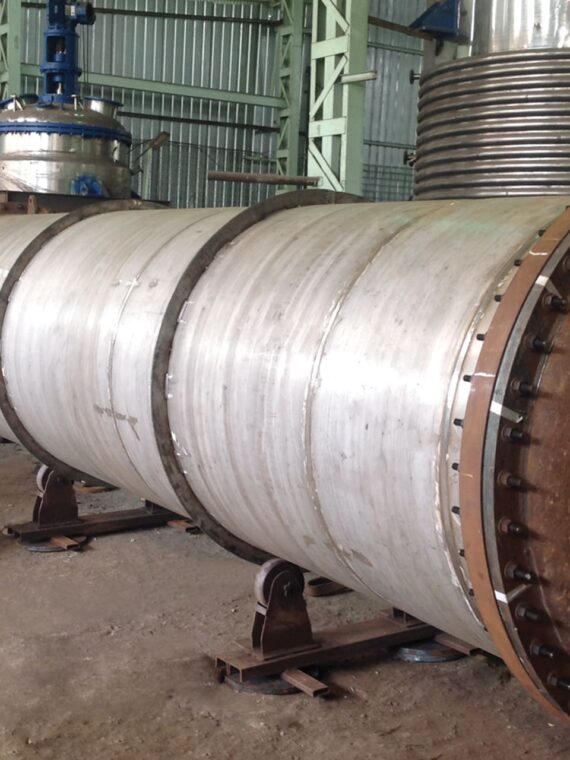
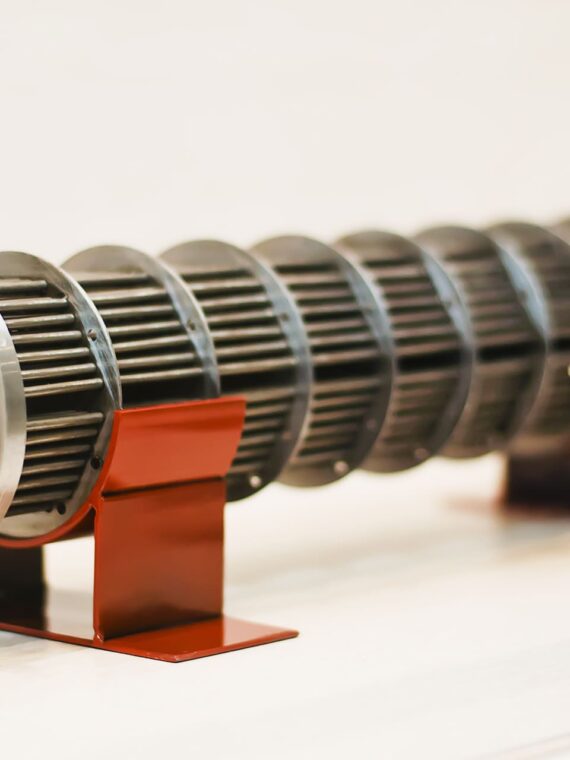
One of the most popular heat exchanger designs used in industry is the shell-and-tube design. This type of heat exchanger contains a number of tubes surrounded by a shell that helps transfer heat from one fluid to another.
Shell-and-tube heat exchangers are well known for their toughness and robustness, and are designed to operate at very high temperatures and pressures. They are often found in chemical plants, refineries, and power stations. They are especially appropriate in steam systems and high thermal load systems.
Their biggest advantage is longevity since the tubes can be replaced independently of the rest of the system without having to replace the whole thing. Their main disadvantages are their large size and relatively high cost.
Plate heat exchanger
This particular type of heat exchanger has experienced rapid growth due to increased demand for efficient and compact heat exchangers. The plates used in the plate heat exchangers help increase the amount of heat transfer surface area.
They are commonly used in the food processing industry, pharmaceutical industry, and HVAC applications where space is a constraint. The efficiency of the heat transfer process makes these devices quite efficient and cost-effective.
It is also possible to scale up their capacity simply by using more plates. It is easy to service these devices, as the plates can be detached and washed easily. They cannot be used in cases where the pressure is high or the fluid is dirty.
U-Tube Heat Exchanger
This is a modification of the shell and tube heat exchanger type, whereby the tubes have been bent into a U shape. The advantage of this type of heat exchanger is that the bending of the tube takes care of expansion or contraction caused by temperature changes.
The application areas include those involving high temperatures like in petrochemical processes and steam. They are robust and therefore require minimal maintenance. They are difficult to clean because of the U shape.
Floating Head Heat Exchanger
A floating head heat exchanger provides easy maintenance and cleaning facilities in terms of its design. This is because one end of the bundle is made free to move. In other words, the bundle can be lifted out of the shell.
Therefore, floating head heat exchangers are preferred by industries like chemical industries and oil refineries, where frequent cleaning is required. The heat exchanger works best in conditions where there is heavy corrosion and foulage of the fluid.
Though they provide maximum reliability and service life, they are rather costly. In addition, they occupy more area compared to other types of exchangers. But they find many takers among various industries.
How to Choose the Right Heat Exchanger for Your Manufacturing Plant
Corrugated Tube Heat Exchanger
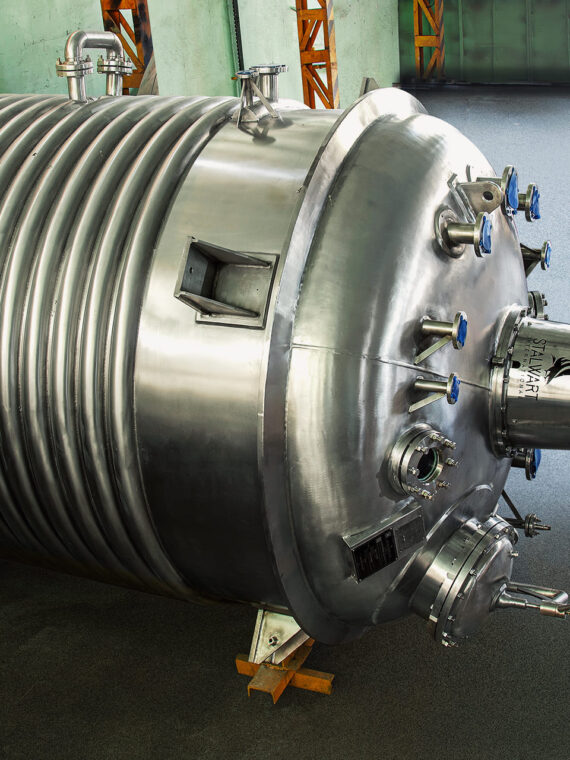
This is an example of an innovative heat exchanger, whose tube structure enables it to facilitate turbulent flow, leading to efficient energy transfer.
This type of heat exchanger finds application in industries that place emphasis on performance and sustainability, including the pharmaceutical industry, the food processing industry, and renewable energy sources industries. It is ideal for use in modern manufacturing plants because of its effectiveness.
Its ability to minimize fouling through improved fluid flow also makes it effective. However, it may be relatively expensive and may need customized components.
Application Across Industries
Various industries employ various kinds of heat exchangers depending on their operational requirements. Shell and tube and floating head heat exchangers are commonly used in the chemical and petrochemical industries owing to their high pressure and temperature capabilities.
Plate heat exchangers or corrugated tube heat exchangers are favored in pharmaceuticals and food processing for their compactness and efficiency. The power generation sector and energy industry make use of shell and tube heat exchangers or air-cooled heat exchangers to accommodate their huge thermal capacities.
Conclusion
Understanding heat exchanger types in industry is essential for selecting the right equipment for your application. Each design offers unique benefits depending on process conditions, maintenance requirements, and performance goals.
Shell and tube exchangers provide strength and reliability for heavy industries, while plate exchangers offer compact efficiency. U-tube and floating head designs support high-temperature and maintenance-intensive environments, and corrugated tube exchangers deliver advanced energy efficiency.
By carefully evaluating your process needs and working with experienced suppliers, you can select a heat exchanger that enhances efficiency, reduces costs, and supports long-term industrial success.
FAQs
1. What are the main types of heat exchangers used in industry?
The main types of heat exchangers used in industry include shell and tube heat exchangers, plate heat exchangers, U-tube heat exchangers, floating head heat exchangers, and corrugated tube heat exchangers.
2. Which heat exchanger is best for high-pressure industrial applications?
Shell and tube heat exchangers are considered ideal for high-pressure and high-temperature industrial applications because of their strong and durable construction.
3. Why are plate heat exchangers popular in the food and pharmaceutical industries?
Plate heat exchangers are compact, energy-efficient, and easy to clean, making them suitable for hygienic industries like food processing and pharmaceuticals.
4. What is the advantage of a floating head heat exchanger?
A floating head heat exchanger allows easier cleaning and maintenance because the tube bundle can be removed from the shell.
5. Where are U-tube heat exchangers commonly used?
U-tube heat exchangers are commonly used in petrochemical plants, steam systems, and other high-temperature industrial processes.
6. How do corrugated tube heat exchangers improve efficiency?
Corrugated tube heat exchangers create turbulent flow, which improves heat transfer efficiency and reduces fouling inside the system.
7. Why is selecting the right heat exchanger important?
Choosing the correct heat exchanger improves energy efficiency, reduces maintenance costs, enhances process stability, and supports long-term industrial performance.
8. Which industries commonly use heat exchangers?
Heat exchangers are widely used in chemical manufacturing, pharmaceuticals, food processing, power generation, petrochemicals, and renewable energy industries.