
Corrosion Resistant Heat Exchanger Essay
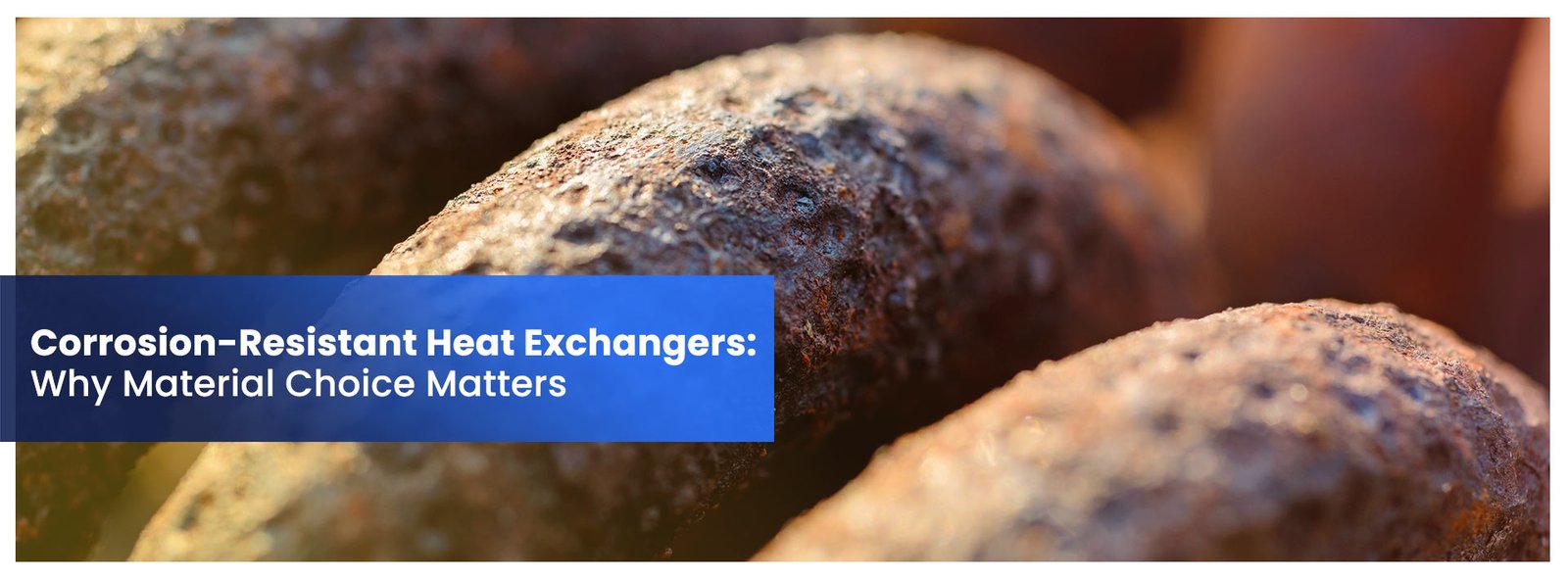
Heat exchangers are susceptible to malfunction due to corrosion processes more frequently than any other type of failure. Even if the tube bundle is made of a material that seems fit for the intended service, pits, crevices, and stress cracks may develop on its surface almost unnoticed by inspectors. Such defects are likely to cause leaks either during a routine inspection or, even more dangerously, when the exchanger is in operation. It is especially crucial to ensure the correct choice of materials when specifying heat exchangers so that potential chemical interactions can be taken into account.
The Nature of Corrosion in Heat Exchangers
Heat exchangers working at a temperature gradient across a tube wall are subject to corrosion processes that are less common for other types of equipment. First, there is both an oxidizing environment typically found on the hotter side of the exchanger and a reducing environment on the opposite side. Second, heat exchangers often experience areas of high fluid velocity causing erosion-corrosion while other parts may have stagnant zones conducive to crevice corrosion. Finally, tube walls are relatively thin to allow for higher heat transfer coefficients, which means that even a small local reduction in thickness may lead to leakage.
Materials and Their Resistance to Different Types of Corrosion
The mechanical integrity of a heat exchanger depends on the material selected based on the predominant type of corrosion that it will be exposed to. It is crucial to remember that there are different modes of deterioration, and resistance to each of them varies significantly across different materials.
The most common type of uniform corrosion has an established method of compensating for its effects by calculating a corrosion allowance. In most cases, standard 316L stainless steel is sufficient to resist uniform corrosion within the heat exchanger’s tube walls, its surface being gradually reduced in thickness over time.
Pitting and crevice corrosion require a different approach as they develop in isolated areas and are much harder to inspect. The most reliable way to prevent it is to choose the appropriate grade of steel based on its Pitting Resistance Equivalent Number (PREN). For waters with chloride content, such as seawater, medium-alloyed austenitic and duplex stainless steels with PREN of 32-40+ are recommended.
When it comes to stress corrosion cracking, another mode of deterioration, super-duplex and duplex stainless steels are usually resistant to chloride-induced cracks at temperatures above 100 degrees Celsius.
Finally, galvanic corrosion needs to be taken into account when choosing materials for a heat exchanger. It is caused by dissimilar metals in an electrolytic environment, and it is especially dangerous when there is a difference between the metal of the tubes and the tubesheet. One way to address this problem is to make the tubesheet out of clad or explosion welded steel.
Common Materials by Level of Performance Chart
For less exacting applications involving cooling water and low-chloride content process fluids, standard 316L stainless steel or an appropriately coated carbon steel can be used. For moderate chlorides – brackish water or cooling loops of many industries – duplex stainless (2205) provides good value in terms of resistance to pitting corrosion. For seawater or high-chloride content process streams, the super-duplex (2507) or 6% molybdenum super-austenitic stainless steels are typical choices in coastal and offshore installations. When dealing with moderately oxidizing acids at elevated temperatures, titanium becomes a preferred option due to its high corrosion resistance and superior strength at a reasonable price. For the most demanding reductions, especially hot hydrochloric or sulfuric acid, nickel alloys are often the only feasible choice due to their exceptional resistance, although Hastelloy C-276 or C-22 are considerably more expensive due to higher content of molybdenum and chromium.
The Rare Earth and Alloying Elements Angle
It is also important to note that many elements which provide higher resistance to various corrosive mechanisms, including molybdenum, chromium, nickel, and in some cases rare earth metals like cerium and yttrium for specialized coating, are found in globally constrained supply chains. When specifying nickel alloys or higher alloyed duplex stainless steels for large exchanger orders, a buyer should be aware that fabrication lead time and cost can skyrocket due to limited supply and demand for the raw materials. This can make a noticeable difference when large surface areas are being purchased.
Practical Guidance for Specification
Prior to specifying 316L stainless steel, a buyer should note the possible chloride content of the fluids the exchanger will be exposed to and cross-reference it with suggested PREN values for the materials available. When selecting materials of construction for a heat exchanger, it is always wise to request from the fabricator the justification for the alloy choice, including any applicable test data or service performance in similar applications. This is particularly important for any equipment which will be exposed to chlorides or corrosive elements as it will dramatically impact the service life of the exchanger.
The Bottom Line
In the context of specifying heat exchange equipment, materials selections are the difference between an exchanger which will actually perform as promised for two decades or more and one which will fail after the first year of operation. Understanding the exact mechanism of corrosion which will take place is always vital in determining the service life of the exchanger.
FAQs
Why is material selection important for heat exchangers?
Material selection determines how well a heat exchanger can withstand corrosion, temperature, pressure and chemical exposure. Choosing the appropriate material can help reduce leaks, maintenance requirements and premature equipment failure.
What causes corrosion in heat exchangers?
Heat exchangers can experience corrosion because of temperature differences, fluid chemistry, chlorides, high fluid velocities, stagnant areas and contact between dissimilar metals. Common forms include uniform, pitting, crevice, stress corrosion cracking and galvanic corrosion.
What is the best material for a corrosion-resistant heat exchanger?
There is no single best material for every application. 316L stainless steel, duplex stainless steel, super-duplex stainless steel, titanium and nickel alloys may be suitable depending on chloride levels, temperature, fluid chemistry and the specific corrosion mechanism.
Is 316L stainless steel corrosion resistant?
Yes. 316L stainless steel provides good resistance to many forms of general corrosion and is commonly used in heat exchangers. However, it may not be suitable for environments with high chloride concentrations or severe pitting and crevice corrosion.
What material is suitable for seawater heat exchangers?
Seawater contains high levels of chlorides, which can increase the risk of pitting and crevice corrosion. Depending on the application, materials such as super-duplex stainless steel, 6% molybdenum stainless steels and titanium may be considered.
What is PREN in corrosion-resistant equipment?
PREN stands for Pitting Resistance Equivalent Number. It is a comparative measure used to estimate a stainless steel alloy’s resistance to chloride-induced pitting corrosion. Higher PREN values generally indicate greater pitting resistance.
How can galvanic corrosion be prevented in heat exchangers?
Galvanic corrosion can occur when dissimilar metals are exposed to an electrolyte. Material compatibility, appropriate isolation, protective coatings and suitable tubesheet construction can help reduce the risk.
When should duplex stainless steel be used in a heat exchanger?
Duplex stainless steel can be considered for applications where higher resistance to chloride-induced pitting and stress corrosion cracking is required than conventional austenitic stainless steel can provide. The specific grade should be selected based on the operating conditions.
Are titanium heat exchangers resistant to corrosion?
Titanium offers excellent corrosion resistance in many demanding environments, including certain oxidising and chloride-containing applications. Its suitability still depends on the specific fluid chemistry, temperature and operating conditions.
How does corrosion affect heat exchanger performance?
Corrosion can reduce tube-wall thickness, create pits and cracks, cause leaks and eventually compromise mechanical integrity. Localised corrosion can be particularly difficult to detect before it causes significant damage.