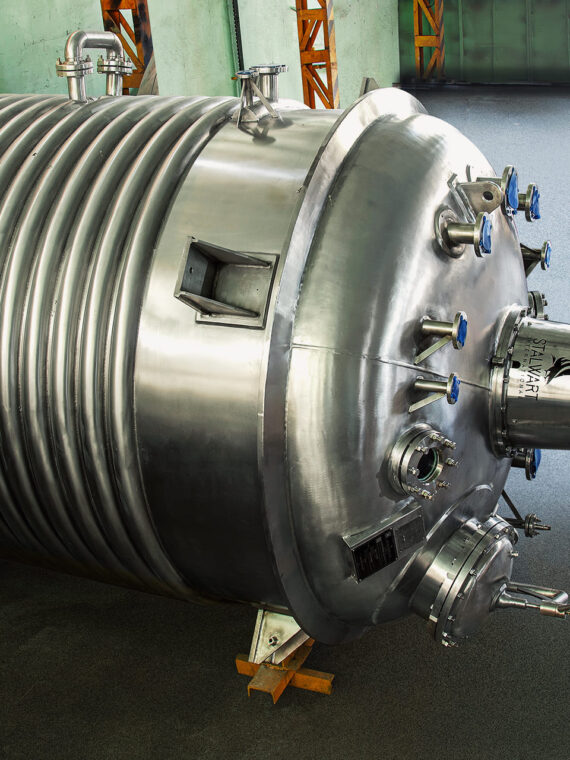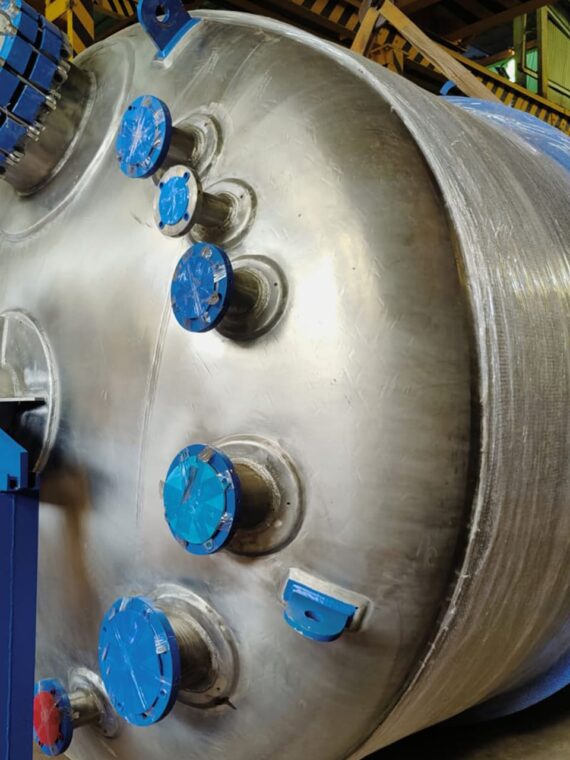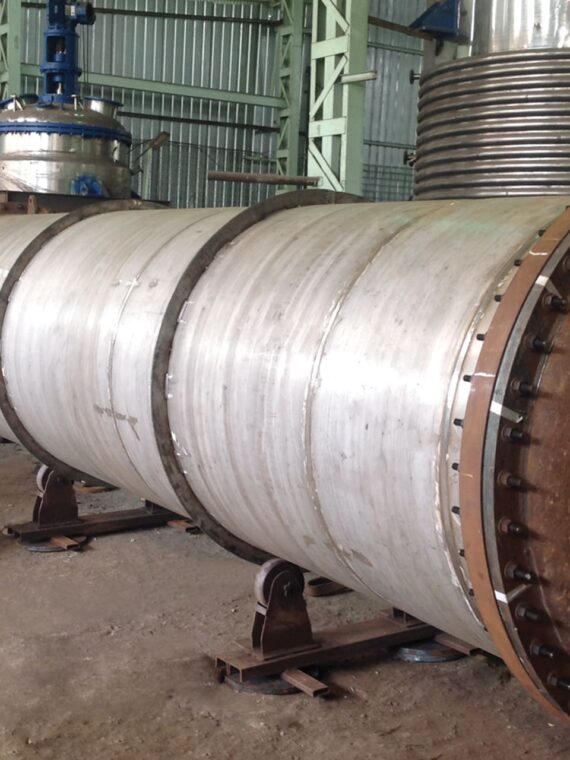

The process manufacturing industry of the UAE, including oil and gas, petrochemicals, water treatment, food processing, pharmaceuticals, and specialty chemicals, largely depends on the ability to provide high-quality pressure vessels to ensure safe, efficient, and continuous operations. Since pressure vessels are used in high-pressure, high-temperature environments, the slightest design defect or fabrication error can lead to unsafe malfunctions, costly downtime, or regulatory noncompliance.
Selecting the appropriate pressure vessel manufacturer is thus a strategic move. When companies issue contracts, they must consider technical capabilities, certifications, engineering expertise, and industry experience. Indian pressure vessel manufacturers have performed well in the UAE over the past few years, thanks to their consistent ability to deliver global-quality standards at relatively low cost.
Key Technical Checks for Selecting a Pressure Vessel Manufacturer in the UAE
The author discusses the most popular technical checks that UAE industries need to consider and explains why, in most cases, Indian manufacturers are the best option for pressure vessels.
1. Verify Compliance with ASME, API & UAE Regulatory Standards
The most important action that has to be performed first is to make your manufacturer comply with international codes, e.g.:
- ASME Section VIII Div. 1 & 2
- API 650 / API 620
- UAE Civil Defense requirements.
- ADNOC, ENOC, EMAAR, ARAMCO, and SABIC approvals of vendors.
The manufacturer’s certifications, including ASME U, U2, R, and NB, ensure quality and traceability in line with world standards. The majority of the top Indian manufacturers hold these certifications, indicating they are entirely in line with the UAE audit expectations.
You May Also Like: Understanding The ASME U Stamp: Quality & Safety of Pressure Vessel Manufacturing
2. Assess Expertise in Material Selection for UAE’s Climate
The climate of the UAE is hot, humid, saline, and dusty, which can promote corrosion and shorten equipment life. Your manufacturer should be in a position to choose the appropriate materials:
- Carbon Steel (CS)
- Stainless Steel (SS 304/316/316L)
- Duplex & Super Duplex
- Inconel, Hastelloy, Monel
- FRP-lined or rubber-lined vessels.
Indian manufacturers have extensive experience providing vessels for the Middle Eastern environment that are durable, corrosion-resistant, and perform well.
3. Check Engineering/Design Facilities.
A pressure vessel manufacturer is supposed to be technically strong; it should be able to supply:
- PV elite/COMPRESS design calculations.
- SolidWorks 2D/3D modeling and AutoCAD.
- Finite Element Analysis (FEA)
- Nozzle load analysis and thermal analysis.
- Reactor custom engineering, heat exchanger, storage tank, scrubber, and skid-mounted systems.
The Indian engineering teams are also reputed to be combining high design expertise and low-cost fabrication to suit the UAE process industries.
4. Evaluate Welding Quality & Certifications
The pressure vessel safety and integrity depend on welding. The manufacturer must provide it:
- WPS, PQR, and WPQ documentation approved.
- Welder- ASME Section IX.
- Automated welding of GTAW, SAW, and MIG.
- Filler wire and consumable traceability 100 percent.
Indian manufacturing companies can achieve the expected quality of the welding process, made possible by strong QA/QC departments and well-written procedures.
5. Grant NDT (Non-Destructive Testing) Competence.
NDT also promotes structural integrity and ensures the vessel’s safety. Look for:
- Radiography Testing (RT)
- Ultrasonic Testing (UT)
- Dye Penetrant Testing (DPT)
- Magnetic Particle Teaching (MPI)
- PMI Testing
- Hydrostatic pressure tests measure the amount of fluid retained in the uterus after childbirth.
- Pneumatic pressure tests: These are performed to determine how much fluid the uterus can accommodate after labor.
Most Indian manufacturers have in-house NDT laboratories, which will help UAE customers achieve ASME and local compliance within a relatively short time.
6. Review Infrastructure Fabrication.
An effective manufacturing system ensures precision, on-time delivery, and the manufacture of oversized or heavy vessels. Key capabilities include:
- Overhead cranes (10–50+ tons)
- The plates are rolled over machines.
- CNC laser cutting machines, CNC plasma cutting machines
- Heat treatment furnaces
- Blasting & painting booths
- Export ships from assembly yards in large quantities.
The Indian plantation fabrication facilities are among the best in the world and usually better than those in other parts of the world.
7. Take into account the UAE/GCC projects experience.
Local experience will ensure less compliance and quicker approvals. Supply to Indian manufacturers has a good history of supplying:
- UAE (Abu Dhabi, Dubai, Sharjah, Ras Al Khaimah).
- Saudi Arabia (ARAMCO)
- Oman (PDO)
- Qatar (QatarEnergy)
- Kuwait (KOC)
This is a significant advantage, as they understand the engineering standards of the GCC.
8. Test Documentation, Traceability, and Quality Control.
The world-class manufacturer of pressure vessels should have perfect documentation, including:
- Design calculations
- MTCs & QAPs
- ITPs & Weld maps
- NDT reports
- Heat treatment charts
- Throughout the whole manufacturing process, one must have a Final Manufacturer Data Book.
The strict documentation discipline is a characteristic feature of Indian companies, necessary for UAE audits and subsequent maintenance.
9. Test After-Sales Support and Service.
The manufacturer is to provide:
- Installation assistance
- On-site inspection
- Troubleshooting
- Refurbishment or repair assistance.
The Indian suppliers usually provide virtual support and site visits, or partner support in the UAE, to facilitate smooth operations even after delivery.
Why Indian Manufacturers Are the Best Choice for UAE Pressure Vessel Requirements
1. Competitiveness with World-Class Quality.
India provides internationally approved engineering, the most sophisticated fabrication equipment, and highly skilled labor at a very low cost, without compromising quality, compared to manufacturing costs in Europe or America.
2. Comprehensive Knowledge of the Middle Eastern Circumstances.
The years of supplying the UAE and GCC have enabled Indian manufacturers to become specialists in corrosion, temperature changes, and local technical demands.
3. Quick Supply and Logistics.
Proximity, good trade relations, and shorter sea routes also reduce delivery time and lower logistics costs.
4. GCC Mega-Projects Experience.
Indian vessels are widely used in the oil and gas, petrochemical, water purification, and manufacturing industries of the Gulf.
5. Critical Documentation Standards.
Indian manufacturers are skilled at preparing the required ASME-qualified dossiers, a key requirement for UAE approval processes.
6. Cost-effective and does not interfere with safety.
The costs of competitive fabrication allow UAE industries to reduce CAPEX and obtain powerful, durable equipment.
You May Also Like: How Indian Process Equipment Manufacturers Drive Global Growth
Conclusion
Selecting an appropriate pressure vessel manufacturer in UAE for process manufacturing requires careful consideration of technical capability, certifications, engineering strength, and quality systems. These factors, when compared internationally, make Indian pressure vessel manufacturers the most viable, valid, and cost-effective option.
This is because they combine global compliance, excellent engineering, extensive experience in the GCC, stringent documentation, low-cost pricing, and prompt delivery, making them a perfect match for the UAE’s fast-expanding industrial environment.
FAQs
1. Which pressure vessel codes are mandatory in the UAE?
Pressure vessels in the UAE are generally required to comply with ASME Section VIII (Div. 1 or Div. 2). Most oil, gas, chemical, and power projects also demand ASME Section IX for welding and ISO 9001 certification. ADNOC, DEWA, and other authorities will reject vessels without ASME-compliant documentation.
2. What should be technically verified before finalizing a pressure vessel manufacturer?
Verify the manufacturer’s ASME authorization, material traceability (MTCs), qualified welders, approved WPS/PQR, in-house NDT (RT, UT, PT, MT), and hydrostatic testing capability. These are non-negotiable for UAE process plants.
3. Why is ASME Code VIII compulsory for UAE industrial projects?
ASME Code VIII ensures the vessel can safely withstand internal pressure. UAE EPC contractors and regulators rely on this code to prevent failures, leaks, and explosions. Vessels not built to ASME Code VIII are typically not accepted on-site.
4. How much does an ASME pressure vessel cost in the UAE?
Cost depends on diameter, thickness, material grade, design pressure, NDT scope, and certification level. ASME-certified vessels cost more upfront, but they avoid rejection, rework, and safety shutdowns in UAE process facilities.