
Titanium and Hastelloy both represent materials that command a significantly higher price than most other alloys a process engineer might specify. It is therefore incumbent upon such engineers to be able to distinguish between those few situations where such materials are actually necessary, and those where another kind of steel would suffice. In short, the ability to recognize what makes titanium and hastelloy suitable for certain applications compared to other materials is a crucial part of being a process engineer.
Why These Materials Are So Expensive
The main reason why titanium is costly has to do with the metal’s properties and the welding technology that must be used to weld it, which adds to the overall cost of equipment made from it. This metal is difficult to work with, requiring specialized equipment for machining, and can only be welded using inert gas environments to prevent oxidation and other undesirable side reactions, adding to the labor and material costs. Another factor is the relative scarcity of titanium, which also drives up prices. The same principles apply to hastelloy, an alloy of nickel, molybdenum, and chromium that is also expensive due to its fabrication and welding requirements, as well as the volatility of the market prices of its constituent elements. These two metals have a much higher initial cost than most other metals, and take significantly longer to acquire due to limited availability, compared to standard stainless-steel equipment.
A Case for Titanium
Titanium is mainly useful in an oxidizing environment, highly oxidizing environments in particular. It is also resistant to seawater, making it the material of choice for chlorine production plants, bleach production facilities, and certain heat exchangers with seawater cooling. However, titanium has another advantage over other materials, in that it possesses an excellent ratio of strength to density. Thus, its use in equipment fabrication can lead to mechanical advantages and cost reductions elsewhere in the equipment, such as in the size and cost of supporting structures, often overlooked by engineers who favor titanium for its oxiding resistance alone. It must be noted that titanium’s resistance to oxidation places it in direct opposition to reducing acids like hydrochloric acid, which it is exceptionally vulnerable to – a pitfall that many engineers fall into when specifying titanium equipment.
A Case for Hastelloy
Hastelloy, as mentioned above, is an alloy primarily composed of nickel. It is usually specified in oxidizing-reducing environments, or in environments where the process switches between the two on a regular basis – a situation in which other materials, including titanium, tend to fail spectacularly. As such, it is commonly found in flue gas desulfurization equipment, certain pharmaceutical processes utilizing mixed acid, and in some pesticide manufacturing plants where the process varies from one acid to another in different stages. It is also useful in highly acidic environments with chlorides in the mix, where titanium tends to pit.
The other common alloy of nickel is found in Hastelloy B series, which are more fit for hydrochloric and sulfuric acid service without chlorides, but should not be used in environments with chloride ions, which cause rapid corrosion. Thus, Hastelloy B-series and C-series are mutually exclusive, despite both being types of Hastelloy.
The Economics: Why the Premium Often Pays for Itself
It is also vitally important to note that the economics of exotic alloys rarely involve the upfront cost of the equipment. Rather, a lower-cost vessel made from another material, such as 316 stainless steel, may well prove to be much more expensive in the long run, if it requires frequent and expensive maintenance due to pitting, stress corrosion cracking, or other failure modes. It is therefore important to consider the lifetime cost of the equipment, and for many chemical processes, the lifetime cost of equipment made from exotic alloys ends up being lower than that of equipment made from other metals, after factoring in the risks and costs of failure. Thus, an experienced process engineer will be able to identify situations where specification of other materials than titanium or Hastelloy would prove to be too costly over the equipment’s lifetime, and request clarification as to why such materials are being considered.
Working With a Titanium or Hastelloy Fabricator
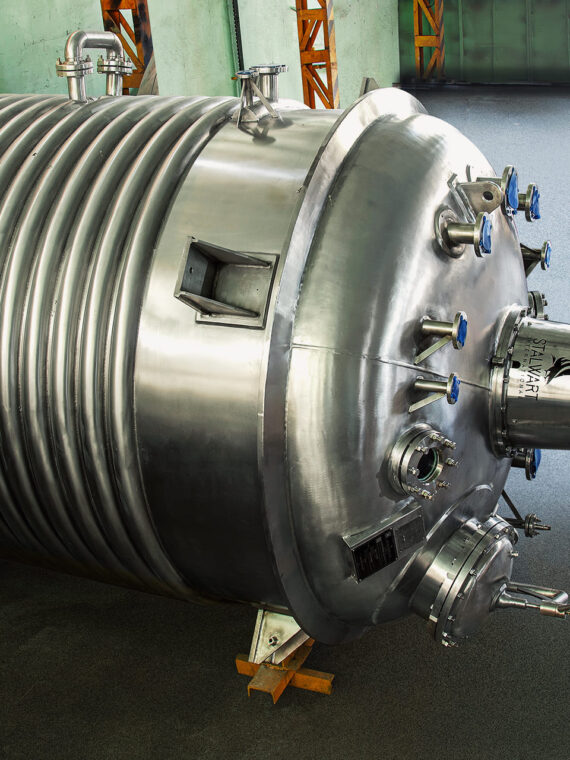
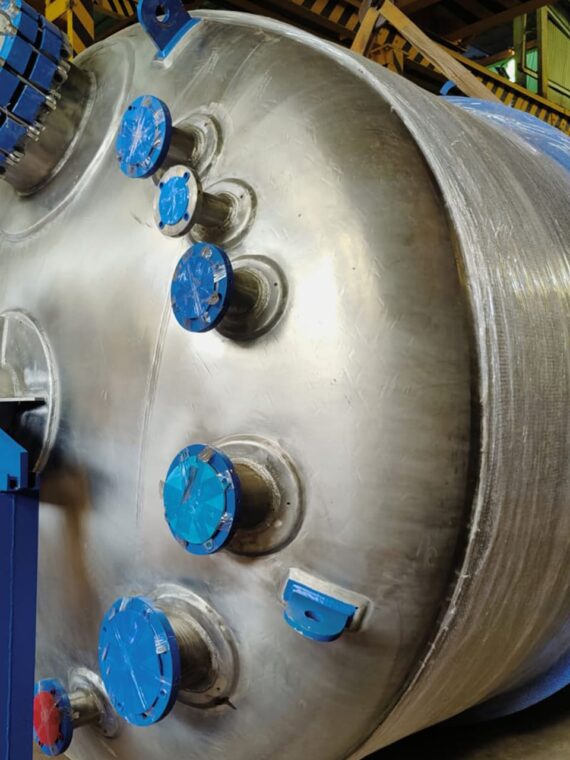
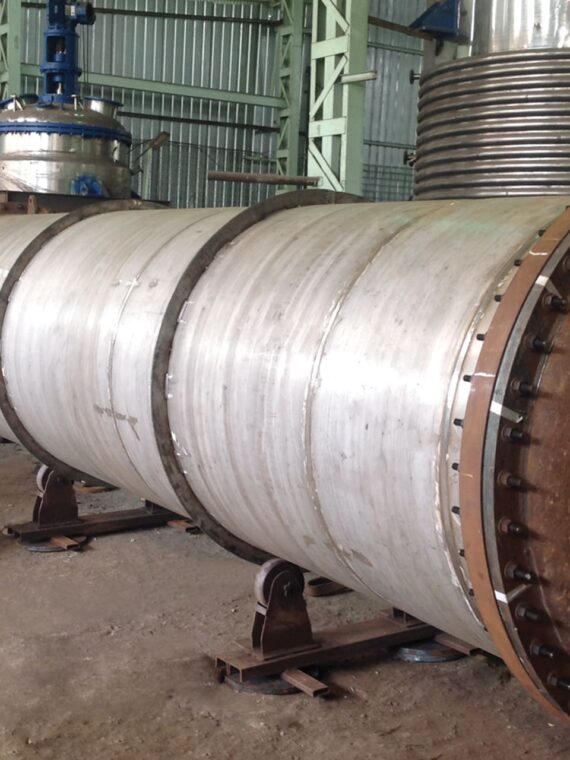
The process of selecting a titanium or hastelloy equipment fabricator differs somewhat from selecting a manufacturer of standard carbon steel or stainless-steel equipment, in that a qualified fabricator must possess more experience with the exotic metals. It is therefore important to ask potential fabricators about their qualifications for titanium or hastelloy fabrication, such as welding procedures for the specified metal and exact alloy grade that are necessary to ensure quality welds. Another consideration is the fabricator’s ability to acquire mill-certified metals for titanium or hastelloy, due to the long lead times for such equipment. It is therefore advisable to only work with fabricators who possess past experience with titanium or hastelloy equipment fabrication, and ideally have references for similar equipment as the one being requested. A titanium reactor vessel fabricator that only occasionally takes on titanium equipment is unlikely to be as competent as a fabricator that specializes in titanium reactors, due to the steep learning curve for working with such materials.
Final Guidance
Titanium and hastelloy are valuable materials that possess unique properties allowing them to resist extreme environments that other materials fail against, but they also come at a steep price. Thus, it is important to understand when and where such materials are indicated, and when other materials such as stainless-steel can be used instead. The key to specifying equipment made from titanium or hastelloy lies in process analysis – it is important to analyze the exact nature of the process the equipment will be a part of, and identify the conditions it will be exposed to in order to select the material best suited to handle those conditions. In short, a competent process engineer never specifies titanium or Hastelloy without understanding the chemistry of the process the equipment will take part in.
FAQs
Why is titanium used for reactor equipment?
Titanium is used for reactor equipment because of its excellent corrosion resistance in highly oxidising environments, strong resistance to seawater and favourable strength-to-weight ratio. It can be suitable for applications where conventional stainless steel may experience excessive corrosion.
When should a process engineer choose titanium over stainless steel?
Titanium may be considered when the process involves highly oxidising conditions, seawater or other environments where stainless steel does not provide adequate corrosion resistance. The decision should be based on the specific process chemistry, temperature, concentration and operating conditions.
What is the difference between titanium and Hastelloy equipment?
Titanium is particularly valuable in highly oxidising and seawater environments, while Hastelloy alloys are commonly selected for demanding chemical environments involving combinations of oxidising and reducing conditions, acids and chlorides. The appropriate material depends on the exact process conditions.
Why is Hastelloy used in chemical processing equipment?
Hastelloy offers strong resistance to many aggressive chemical environments and can be suitable for processes involving highly acidic conditions, chlorides and changing oxidising or reducing conditions. Different Hastelloy grades have different corrosion-resistance characteristics.
Is Hastelloy better than titanium for reactor fabrication?
Neither material is universally better. Titanium and Hastelloy are designed for different chemical environments. Material selection should consider the process chemistry, corrosion mechanism, temperature, pressure, chloride concentration and expected operating conditions.
Why is titanium equipment more expensive than stainless steel equipment?
Titanium equipment generally has a higher initial cost because titanium requires specialised fabrication, machining and welding procedures. Material availability and longer procurement times can also contribute to the overall cost.
How can a titanium reactor manufacturer ensure fabrication quality?
A qualified titanium reactor manufacturer should have established titanium welding procedures, experienced fabrication personnel, appropriate inert-gas protection, suitable machining capabilities and access to mill-certified material. Previous experience manufacturing similar titanium reactors is also valuable.
What should I consider when selecting a titanium reactor manufacturer?
Consider the manufacturer’s experience with titanium fabrication, welding qualifications, material traceability, quality-control procedures, ability to source the required alloy grade and experience with reactors operating under similar process conditions.
Can Hastelloy replace titanium in corrosive applications?
In some applications, Hastelloy may be an alternative to titanium, but material compatibility depends on the specific chemical environment. Acid type, chloride concentration, temperature and whether conditions are oxidising or reducing should all be evaluated before selecting the material.
How do exotic alloys reduce long-term equipment costs?
Although titanium and Hastelloy equipment can have higher upfront costs, their corrosion resistance may reduce maintenance, repairs, replacement frequency and downtime. Therefore, lifecycle cost rather than purchase price alone should be considered when selecting reactor materials.