
The global food and beverage landscape is undergoing a silent but radical transformation. Driven by shifting consumer demands for “clean label” products, skyrocketing energy costs, and the sudden boom of alternative proteins, the systems responsible for processing our food are being pushed to their absolute physical limits.
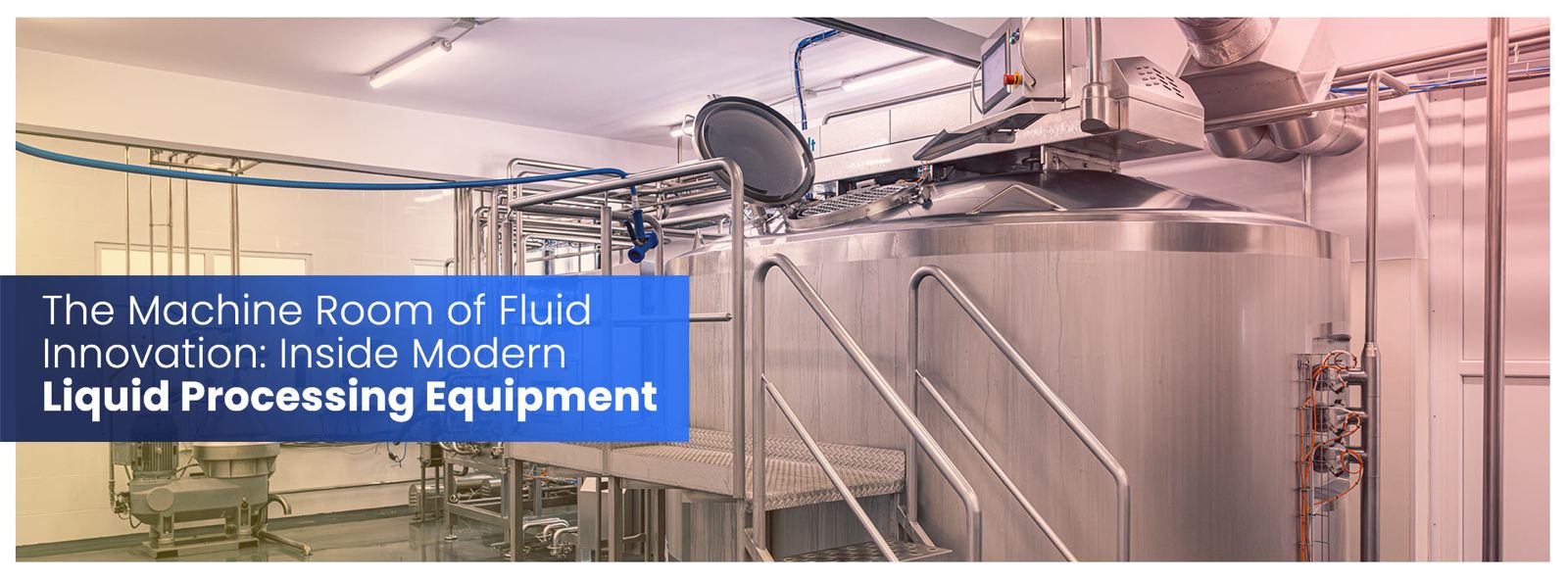
At the heart of this evolution is the industrial hardware designed for complex liquid process technology. Handling water or low-viscosity soft drinks requires standard fluid dynamics. However, processing complex liquids—such as high-viscosity oat milks, delicate fruit purees with suspended particulates, structural protein emulsions, and non-Newtonian fluids—demands highly specialized equipment.
For modern plant engineers, success depends entirely on selecting the right mechanical components. Here is a comprehensive technical breakdown of the core equipment architectures defining modern liquid process plants.
1. Advanced Fluid Handling: Low-Shear Pumps and Rheology-Specific Valves
The fundamental challenge of modern liquid processing lies in rheology—the study of how matter flows. Many complex food matrices are non-Newtonian, meaning their viscosity changes depending on the force (shear stress) applied to them.
Traditional high-speed centrifugal pumps act like blenders; they apply immense shear force that can permanently break down a product’s texture, ruin dairy emulsions, or smash delicate suspended solids (like fruit pieces or aloe vera chunks).
To counter this, modern process lines rely heavily on specialized Positive Displacement (PD) Pumps:
Rotary Lobe and Progressive Cavity Pumps
These units move complex fluids gently through defined, expanding cavities. They maintain a constant flow velocity and pressure, transporting highly viscous or shear-sensitive fluids without altering their physical properties.
Hygienic Flow Components
Standard valves create turbulent zones that can damage fluids. Equipment lines now utilize specialized double-seat matrix valves (such as the Evoguard series) and mixproof valves. These components ensure completely turbulent-free transitions, isolate distinct fluid lines without risk of cross-contamination, and allow for a smooth, uninterrupted product path.
How the Middle East’s Water Crisis Is Driving Demand for Process Equipment
2. Precision Dosing Systems for Delicate Particulates
Injecting solids into a moving liquid stream without crushing them has long been an engineering bottleneck. Modern consumer trends demand integer solids—like whole fruit pieces in yogurt drinks or boba pearls in teas.
To handle this, manufacturers have developed specialized, non-destructive dosing equipment like the Krones FlexiFruit system. Instead of mixing fruits into a main batch tank where they are exposed to continuous agitation, the particulate dosing unit operates as a separate, synchronized stream. The equipment utilizes gentle piston-driven or diaphragm dosing heads to accurately inject the solid pieces directly into the main liquid line immediately before the filling valve. This minimizes mechanical stress on the particles and ensures precise, identical distribution in every single container.
How Sustainability Is Transforming Process Equipment Manufacturing
3. High-Performance Mixing, Blending, and Carbonation Skids
Achieving perfect ingredient blending or exact gas-to-liquid ratios at massive industrial scale requires highly sensitive mechanical skids.
Continuous Blending Skids: Modern carbonated soft drink and juice lines utilize continuous multi-component mixers (like the Contiflow system). These skids feature precise inline mass flow meters and automatic dosing valves that adjust the Brix (sugar) and flavor ratios thousands of times per minute based on continuous optical readings.
Mass-Transfer Deaeration and Carbonation: Before a beverage can be carbonated, dissolved oxygen must be stripped out to prevent oxidation and ensure shelf stability. Modern vacuum deaeration columns remove oxygen down to parts-per-billion levels before high-precision carbonation nozzles inject $CO_2$ gas directly into the fluid stream under controlled pressure, ensuring perfect gas dissolution.
4. Next-Gen Thermal Processing: Direct Steam Infusion and Sterile Tanks
Microbiological safety is the non-negotiable bedrock of food processing. However, traditional prolonged heat pasteurization often scorches delicate liquids, altering the flavor profile and stripping out vital nutrients.
Ultra-High Temperature (UHT) Infusion Skids
To protect fluid quality, process lines deploy Direct Steam Infusion Skids (such as the VarioAsept series). Instead of pumping the liquid past a hot metal surface, the complex fluid is sprayed into a pressurized chamber filled with culinary steam. The liquid absorbs the steam, heating almost instantly to sterilization temperatures ($140^\circ\text{C}$ to $150^\circ\text{C}$) within a fraction of a second. It is then instantly flash-cooled in a vacuum chamber, which extracts the added water vapor. This ultra-rapid thermal cycle eliminates spoilage organisms while perfectly preserving the fresh flavor profile of plant-based milks and premium juices.
Aseptic Storage Equipment
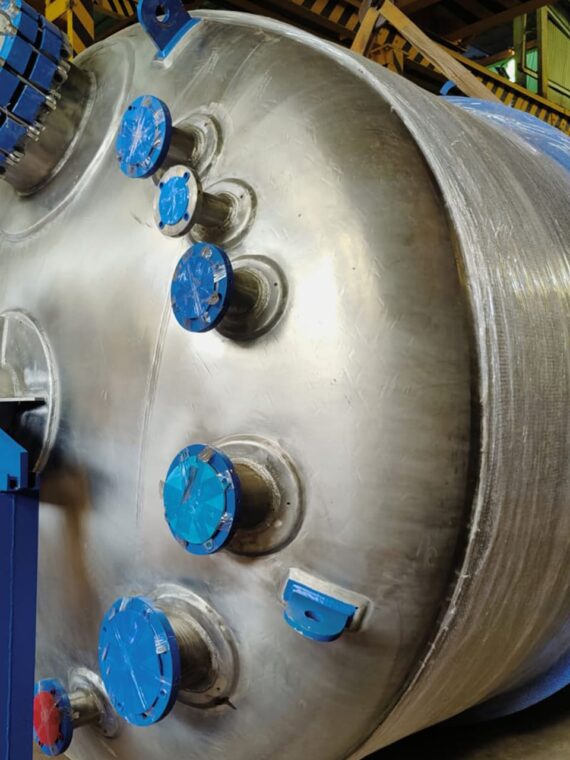
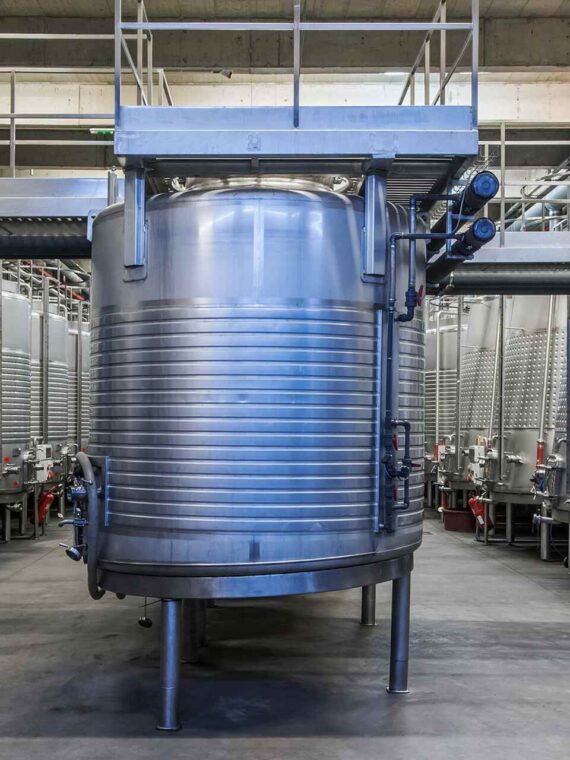
Once sterilized, the fluid must be stored in a completely sterile environment before packaging. This relies on heavy-duty Aseptic Buffer Tanks (like the VarioStore range). These stainless-steel pressure vessels feature specialized sterile air filtration blankets and magnetic agitators that keep complex liquids perfectly homogenized without utilizing mechanical shafts that could compromise the sterile seal.
5. Solid-Liquid Separation: Hygienic Decanter Centrifuges
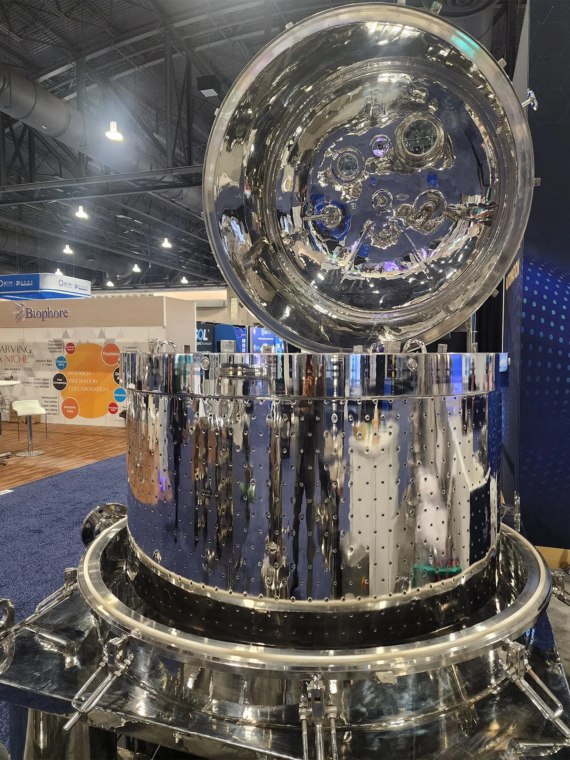
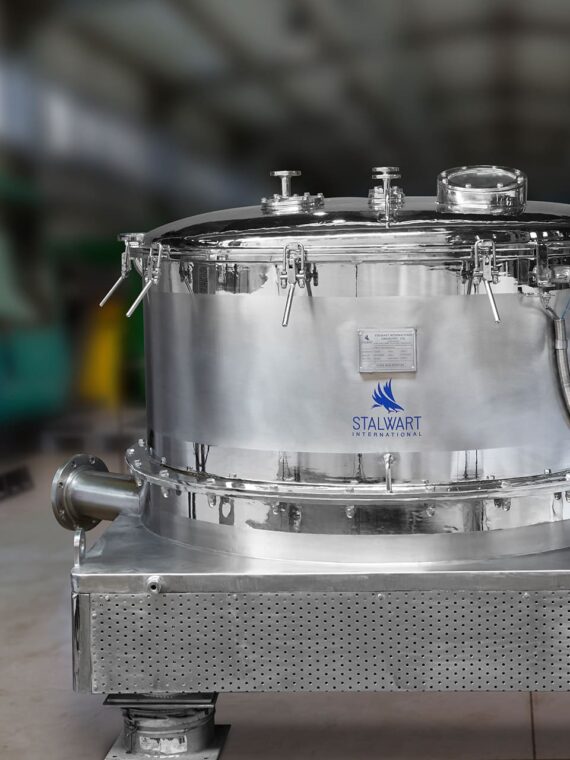
In brewing, wine production, and alternative protein extraction, isolating pure liquid from dense sediments is a core processing step. The industry has shifted away from open, manual filtration frames to completely enclosed Hygienic Decanter Centrifuges (such as the UniPure S series).
These high-speed rotating bowls use centrifugal force to continuously separate solids from liquids based on density differences. The equipment features fully automated CIP (Clean-in-Place) compatibility and a sealed gas blanket, preventing the liquid from interacting with ambient oxygen. This design delivers maximum yield and brilliant clarity while slashing the water and time traditionally wasted during filter cleaning cycles.
Looking Forward: The Connected Component
The mechanical hardware of a process plant is no longer isolated; it is fully integrated into digital ecosystems. Modern pumps, valves, and heat exchangers are equipped with vibration, temperature, and pressure sensors that stream real-time operational metrics to industrial AI networks. By tracking exactly how components interact with complex, shifting fluid dynamics, this hardware-software synergy prevents pipeline blockages, eliminates manual adjustment guesswork, and maximizes equipment lifetime—ensuring the processing lines of tomorrow are smarter, gentler, and endlessly adaptable.
FAQs
What is liquid processing equipment?
Liquid processing equipment includes industrial machines such as pumps, valves, mixers, heat exchangers, dosing systems, and storage tanks used to transport, blend, heat, cool, and package liquids safely and efficiently in food, beverage, pharmaceutical, and chemical industries.
Why are positive displacement pumps used for viscous liquids?
Positive displacement pumps provide gentle, low-shear fluid transfer, making them ideal for high-viscosity and shear-sensitive products like plant-based milk, fruit purees, dairy emulsions, and sauces without damaging their texture.
What is the purpose of a UHT direct steam infusion system?
A UHT direct steam infusion system rapidly heats liquids to sterilization temperatures and immediately cools them, preserving flavor, nutrients, and product quality while ensuring microbiological safety.
How do continuous blending systems improve production?
Continuous blending systems use inline sensors, flow meters, and automated dosing controls to maintain accurate ingredient ratios, improve consistency, reduce waste, and increase production efficiency.
What are hygienic decanter centrifuges used for?
Hygienic decanter centrifuges continuously separate solids from liquids in applications such as brewing, juice production, dairy processing, and alternative protein manufacturing while supporting automated Clean-in-Place (CIP) operations.
Why is aseptic storage important in liquid processing?
Aseptic storage tanks maintain sterile conditions after thermal processing, preventing contamination and preserving product quality before packaging, which extends shelf life and ensures food safety.
Which industries use modern liquid processing equipment?
Modern liquid processing equipment is widely used in food and beverage manufacturing, dairy processing, pharmaceuticals, biotechnology, cosmetics, chemical production, and alternative protein processing.
How is Industry 4.0 improving liquid processing plants?
Industry 4.0 technologies integrate sensors, automation, and AI-driven monitoring to optimize equipment performance, enable predictive maintenance, reduce downtime, improve efficiency, and enhance product quality.